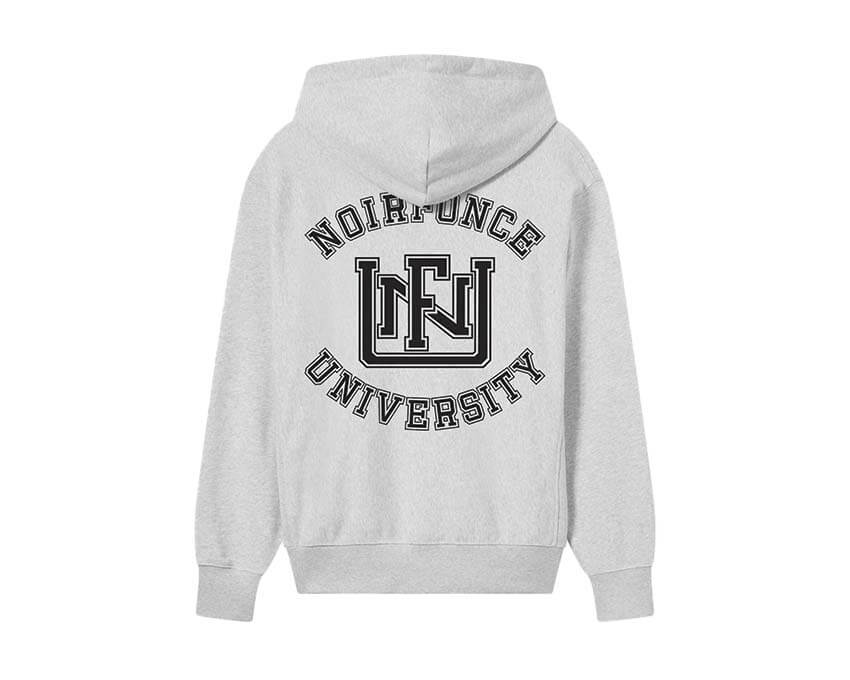
Some garments become icons by accident. Not through marketing campaigns or celebrity endorsements, but by solving a problem so effectively that people refuse to stop wearing them. The hoodie is one of those garments.
Today, it's everywhere. On construction sites and university campuses. In basketball arenas and boardrooms. Worn by athletes, artists, students, and laborers alike.
But long before it became a symbol of contemporary culture, the hoodie was simply workwear. And at the center of that story sits Champion.
The company that would become Champion was founded in Rochester, New York, in 1919 by the Feinbloom family under the name Knickerbocker Knitting Company. Their business was simple: produce durable athletic apparel for schools, colleges, and sports teams.
This was an America in motion. Factories were expanding, organized sports were growing, and universities were becoming incubators for a new kind of youth culture. Clothing needed to be practical, resilient, and affordable; Champion understood this better than most.
Throughout the 1930s and 40s, the brand became a fixture of collegiate athletics, supplying sweatshirts and training garments to campuses across the United States. Long before logos became status symbols, Champion's products earned their reputation through utility. The garments worked. And people kept wearing them.
The origins of the hoodie are surprisingly straightforward.
Athletes training outdoors needed protection from the elements. So did warehouse workers loading trucks in winter and laborers starting shifts before sunrise. The answer was a simple innovation: attach a hood to a heavyweight sweatshirt. The concept was hardly revolutionary. Yet its impact was enormous.
The hood added warmth without restricting movement. The kangaroo pocket offered storage and shelter for cold hands. The garment could be layered, abused, washed repeatedly, and worn every day. It became a tool. Like denim jeans. Like work boots. Like a canvas chore coat. Its value came from function.
If workwear gave the hoodie its purpose, American universities gave it visibility. Throughout the post-war decades, campuses became laboratories for casual dress. Athletic gear moved beyond the field and into everyday life.
Students wore sweatshirts between classes. Athletes wore them to practice. Professors wore them on weekends. The boundaries between sportswear and daily clothing began to blur. Champion was uniquely positioned for this shift.
The brand's Reverse Weave construction, introduced in the 1930s and refined over the decades, solved a persistent problem: shrinkage.
By rotating the grain of the fabric and reinforcing the side panels, Champion created sweatshirts that held their shape through years of wear. What began as a technical solution became one of the most enduring innovations in sportswear history.
By the 1970s and 80s, the hoodie had escaped its original environment. It appeared in skateboarding. In music. In youth culture. In cities far removed from the college campuses that helped popularize it. The garment's appeal was universal because its design was honest. There was no excess. No unnecessary decoration.
Just cotton, fleece, stitching, and purpose.
Like the best examples of American design, the hoodie succeeded because it performed exactly as intended.
More than a century after Champion's founding, the hoodie remains one of the few garments that feels equally at home in sport, work, and everyday life.
Its story mirrors the story of American sportswear itself: practical solutions becoming cultural symbols through repeated use.
Champion didn't set out to create an icon.
They set out to make better athletic clothing.
The hoodie simply happened to be one of those ideas that proved impossible to improve upon.
Sometimes the most influential designs aren't the loudest.
They're the ones that become part of daily life.
The ones we stop noticing because they've always been there.
Like a good hoodie.