First Sight Football: When the Pitch Becomes the Runway

First Sight Football: When the Pitch Becomes the Runway

For decades, football boots belonged to a specific place. They lived under stadium lights, on training grounds, and between the white lines of the pitch. Their purpose was singular: performance. But culture has a way of redrawing boundaries, and today those lines feel increasingly blurred.

Nike's First Sight Football initiative arrives at a moment when football has become far more than a sport. It is music, fashion, design, identity, and community. It shapes how people dress as much as how they play. The tunnel walk has become as scrutinized as the match itself. The touchline is now a front row. The pitch, a stage.

The latest generation of football footwear reflects that reality. Built with the technical innovations demanded by the modern game, yet designed with a visual language that feels equally at home on the street, these boots challenge long-held assumptions about where performance products belong. They are ready for ninety minutes on turf, but equally prepared for everything that happens before and after the final whistle.

What makes First Sight Football compelling is not simply the product. It is the idea that football culture no longer begins when the match starts. It starts the moment you step outside. The journey to the game. The conversations afterwards. The communities that gather around the sport. The style, the attitude, and the rituals that surround it.

In that sense, the initiative feels less like a footwear launch and more like an acknowledgment of a cultural truth: football has escaped the confines of the stadium. The turf has become a runway. The athlete has become a tastemaker. And the boot, once designed exclusively for performance, has become a vehicle for self-expression.

To bring that idea into the physical world, we translated the language of First Sight Football into an in-store installation that explored the intersection of performance, design, and construction. Football boots were suspended within a raw industrial structure, held in place by workshop clamps and surrounded by exposed metallic ducting, creating a visual tension between engineering and movement. The installation drew inspiration from the mechanics behind elite performance while emphasizing the boot as an object of design in its own right. Much like the collection itself, the display existed between two worlds: the technical and the cultural, the pitch and the street. Rather than presenting the product conventionally, we wanted to create an environment that reflected the evolving role of football footwear today: performance equipment reimagined as a cultural artifact.

The future of football does not live solely on the pitch. It lives wherever the game is carried next.


Get yours here. 

Back to blog

Leave a comment

Please note, comments need to be approved before they are published.

Otros blog posts

First Sight Football: When the Pitch Becomes the Runway

First Sight Football: When the Pitch Becomes th...

For decades, football boots belonged to a specific place. They lived under stadium lights, on training grounds, and between the white lines of the pitch. Their purpose was singular: performance. But culture has a way of redrawing boundaries, and today those lines feel increasingly blurred. Nike's First Sight Football initiative arrives at a moment when football has become far more than a sport. It is music, fashion, design, identity, and community. It shapes how people dress as much as how they play. The tunnel walk has become as scrutinized as the match itself. The touchline is now a front row. The pitch, a stage. The latest generation of football footwear reflects that reality. Built with the technical innovations demanded by the modern game, yet designed with a visual language that feels equally at home on the street, these boots challenge long-held assumptions about where performance products belong. They are ready for ninety minutes on turf, but equally prepared for everything that happens before and after the final whistle. What makes First Sight Football compelling is not simply the product. It is the idea that football culture no longer begins when the match starts. It starts the moment you step outside. The journey to the game. The conversations afterwards. The communities that gather around the sport. The style, the attitude, and the rituals that surround it. In that sense, the initiative feels less like a footwear launch and more like an acknowledgment of a cultural truth: football has escaped the confines of the stadium. The turf has become a runway. The athlete has become a tastemaker. And the boot, once designed exclusively for performance, has become a vehicle for self-expression. To bring that idea into the physical world, we translated the language of First Sight Football into an in-store installation that explored the intersection of performance, design, and construction. Football boots were suspended within a raw industrial structure, held in place by workshop clamps and surrounded by exposed metallic ducting, creating a visual tension between engineering and movement. The installation drew inspiration from the mechanics behind elite performance while emphasizing the boot as an object of design in its own right. Much like the collection itself, the display existed between two worlds: the technical and the cultural, the pitch and the street. Rather than presenting the product conventionally, we wanted to create an environment that reflected the evolving role of football footwear today: performance equipment reimagined as a cultural artifact. The future of football does not live solely on the pitch. It lives wherever the game is carried next.   Get yours here. 

Read more

First Sight Football: When the Pitch Becomes th...

For decades, football boots belonged to a specific place. They lived under stadium lights, on training grounds, and between the white lines of the pitch. Their purpose was singular: performance. But culture has a way of redrawing boundaries, and today those lines feel increasingly blurred. Nike's First Sight Football initiative arrives at a moment when football has become far more than a sport. It is music, fashion, design, identity, and community. It shapes how people dress as much as how they play. The tunnel walk has become as scrutinized as the match itself. The touchline is now a front row. The pitch, a stage. The latest generation of football footwear reflects that reality. Built with the technical innovations demanded by the modern game, yet designed with a visual language that feels equally at home on the street, these boots challenge long-held assumptions about where performance products belong. They are ready for ninety minutes on turf, but equally prepared for everything that happens before and after the final whistle. What makes First Sight Football compelling is not simply the product. It is the idea that football culture no longer begins when the match starts. It starts the moment you step outside. The journey to the game. The conversations afterwards. The communities that gather around the sport. The style, the attitude, and the rituals that surround it. In that sense, the initiative feels less like a footwear launch and more like an acknowledgment of a cultural truth: football has escaped the confines of the stadium. The turf has become a runway. The athlete has become a tastemaker. And the boot, once designed exclusively for performance, has become a vehicle for self-expression. To bring that idea into the physical world, we translated the language of First Sight Football into an in-store installation that explored the intersection of performance, design, and construction. Football boots were suspended within a raw industrial structure, held in place by workshop clamps and surrounded by exposed metallic ducting, creating a visual tension between engineering and movement. The installation drew inspiration from the mechanics behind elite performance while emphasizing the boot as an object of design in its own right. Much like the collection itself, the display existed between two worlds: the technical and the cultural, the pitch and the street. Rather than presenting the product conventionally, we wanted to create an environment that reflected the evolving role of football footwear today: performance equipment reimagined as a cultural artifact. The future of football does not live solely on the pitch. It lives wherever the game is carried next.   Get yours here. 

Read more
The Nocturnal Blueprint: Puma Nitro Gingham

The Nocturnal Blueprint: Puma Nitro Gingham

The city at night is not a place of stillness. It’s a silent, thrumming machine, a complex circuit board of light and shadow, and for the runner, a playground of hidden rhythm. In this nocturnal realm, where precision is paramount, the search for gear that understands both the void and the velocity is constant. Into this space steps the Puma Nitro, presenting itself in this specialized "Gingham" iteration not merely as apparel, but as a textured schematic for movement. This is not a traditional gingham. The familiar check pattern is deconstructed here, digitized into a fine, woven textile network that covers the upper. Under precise, moody lighting, the intricate matrix of blue and white threads creates a detailed grid—a blueprint of structural intent. This complex weave is more than aesthetic; it’s a detailed topographical map of engineered support, a visual language for the forces it will contain. The deep blue colorway, highlighted by striking sapphire accents like the leaping cat logos, reads like a binary code for performance: a direct connection between the ground and the runner’s intent. If the upper is the schematic, the midsole is the power supply. The central marker of the technology beneath is the "NITRO" insignia, signifying a force of potent energy return. This isn't just cushioning; it’s an injected matrix of responsiveness, a silent reservoir of potential. The fluid, almost sculpted blue structure of the midsole visuals an echo of a current, a continuous flow designed to propel. The super-critical Nitro foam technology is forged to absorb impact with minimal energy loss, translating effort into a propulsive force that feels symbiotic with the user's pace. It is the core mechanism that provides clarity within the urban chaos. The Puma Nitro Gingham is a masterclass in synthesis, the perfect intersection of textured narrative and advanced engineering. The structured gingham grid of the upper provides targeted containment, while the Nitro foam midsole delivers an unbroken flow of power. It is a silhouette built for the urban navigator who demands precision and seeks rhythm in the asphalt void. The overall impression, from the detailed knit to the clean dark heel contours and the vibrant blue accents, creates a unified object of precise calibration. This is a finely tuned instrument, a bridge between the physical act of running and the cerebral appreciation of design. For those who view the city as a network to be decoded, this iteration offers the perfect map.

Read more

The Nocturnal Blueprint: Puma Nitro Gingham

The city at night is not a place of stillness. It’s a silent, thrumming machine, a complex circuit board of light and shadow, and for the runner, a playground of hidden rhythm. In this nocturnal realm, where precision is paramount, the search for gear that understands both the void and the velocity is constant. Into this space steps the Puma Nitro, presenting itself in this specialized "Gingham" iteration not merely as apparel, but as a textured schematic for movement. This is not a traditional gingham. The familiar check pattern is deconstructed here, digitized into a fine, woven textile network that covers the upper. Under precise, moody lighting, the intricate matrix of blue and white threads creates a detailed grid—a blueprint of structural intent. This complex weave is more than aesthetic; it’s a detailed topographical map of engineered support, a visual language for the forces it will contain. The deep blue colorway, highlighted by striking sapphire accents like the leaping cat logos, reads like a binary code for performance: a direct connection between the ground and the runner’s intent. If the upper is the schematic, the midsole is the power supply. The central marker of the technology beneath is the "NITRO" insignia, signifying a force of potent energy return. This isn't just cushioning; it’s an injected matrix of responsiveness, a silent reservoir of potential. The fluid, almost sculpted blue structure of the midsole visuals an echo of a current, a continuous flow designed to propel. The super-critical Nitro foam technology is forged to absorb impact with minimal energy loss, translating effort into a propulsive force that feels symbiotic with the user's pace. It is the core mechanism that provides clarity within the urban chaos. The Puma Nitro Gingham is a masterclass in synthesis, the perfect intersection of textured narrative and advanced engineering. The structured gingham grid of the upper provides targeted containment, while the Nitro foam midsole delivers an unbroken flow of power. It is a silhouette built for the urban navigator who demands precision and seeks rhythm in the asphalt void. The overall impression, from the detailed knit to the clean dark heel contours and the vibrant blue accents, creates a unified object of precise calibration. This is a finely tuned instrument, a bridge between the physical act of running and the cerebral appreciation of design. For those who view the city as a network to be decoded, this iteration offers the perfect map.

Read more
Stanley x Noirfonce: The Official Drinkware of the University of Noirfonce

Stanley x Noirfonce: The Official Drinkware of ...

Every university has its essentials. The hoodie worn through late nights and early mornings. The notebook filled with half-finished ideas. The bench where conversations stretch longer than planned. The object that quietly accompanies every chapter of the journey. For the University of Noirfonce, that object became a Stanley. Created as a companion piece to the Champion x Noirfonce collection, the Stanley x Noirfonce collaboration extends the fictional world of the University of Noirfonce beyond apparel and into the rituals that define daily life. If Champion supplied the uniform, Stanley provides the vessel. For over a century, Stanley has built products designed around endurance, utility, and longevity. Their products are carried to job sites, mountain summits, road trips, early commutes, and countless moments in between. Much like the best university merchandise, they become more personal with time, collecting stories, marks, and memories along the way. The collaboration draws directly from the visual language established by the University of Noirfonce. Featuring collegiate-inspired graphics, university insignias, and the institution's guiding motto, Lux et Umbra, the piece feels less like a product and more like an artifact from a place that exists somewhere between reality and imagination. Because the University of Noirfonce has never been about classrooms or lecture halls. It is about curiosity. It is about those who continue learning long after formal education ends. The people who collect experiences instead of credits. The ones who understand that growth often happens outside of the syllabus. In that sense, a Stanley feels perfectly at home within the project. It is built to accompany movement. To travel. To endure. To be carried through long days and longer conversations. The result is perhaps the most authentic piece of university merchandise we have produced. A simple object elevated by the stories attached to it. One that feels equally at home on a campus that never existed, and in the lives of those who continue to embody its values every day. Welcome back to the University of Noirfonce. Class is always in session. Stay hydrated

Read more

Stanley x Noirfonce: The Official Drinkware of ...

Every university has its essentials. The hoodie worn through late nights and early mornings. The notebook filled with half-finished ideas. The bench where conversations stretch longer than planned. The object that quietly accompanies every chapter of the journey. For the University of Noirfonce, that object became a Stanley. Created as a companion piece to the Champion x Noirfonce collection, the Stanley x Noirfonce collaboration extends the fictional world of the University of Noirfonce beyond apparel and into the rituals that define daily life. If Champion supplied the uniform, Stanley provides the vessel. For over a century, Stanley has built products designed around endurance, utility, and longevity. Their products are carried to job sites, mountain summits, road trips, early commutes, and countless moments in between. Much like the best university merchandise, they become more personal with time, collecting stories, marks, and memories along the way. The collaboration draws directly from the visual language established by the University of Noirfonce. Featuring collegiate-inspired graphics, university insignias, and the institution's guiding motto, Lux et Umbra, the piece feels less like a product and more like an artifact from a place that exists somewhere between reality and imagination. Because the University of Noirfonce has never been about classrooms or lecture halls. It is about curiosity. It is about those who continue learning long after formal education ends. The people who collect experiences instead of credits. The ones who understand that growth often happens outside of the syllabus. In that sense, a Stanley feels perfectly at home within the project. It is built to accompany movement. To travel. To endure. To be carried through long days and longer conversations. The result is perhaps the most authentic piece of university merchandise we have produced. A simple object elevated by the stories attached to it. One that feels equally at home on a campus that never existed, and in the lives of those who continue to embody its values every day. Welcome back to the University of Noirfonce. Class is always in session. Stay hydrated

Read more
Champion x Noirfonce: The University of Noirfonce

Champion x Noirfonce: The University of Noirfonce

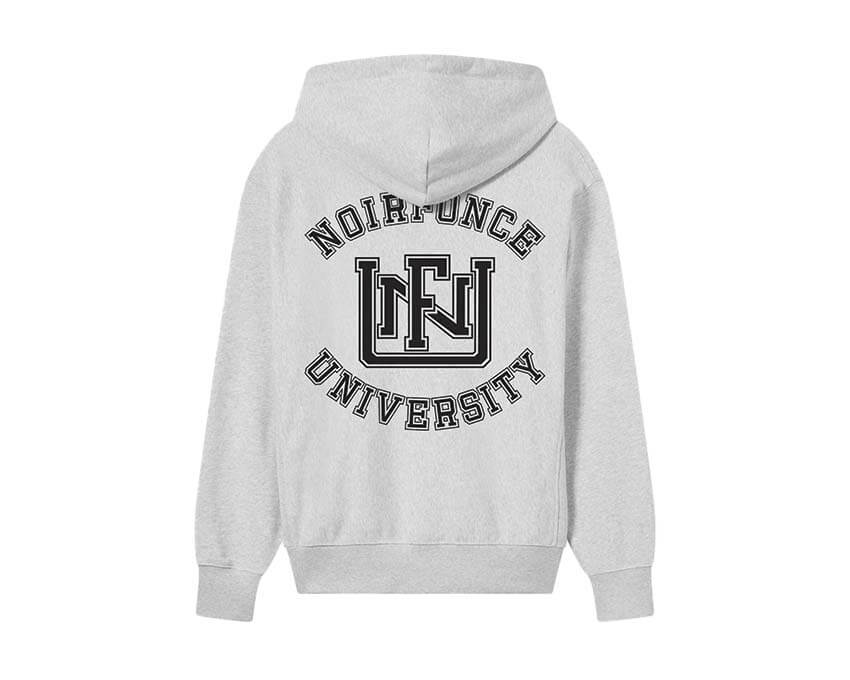
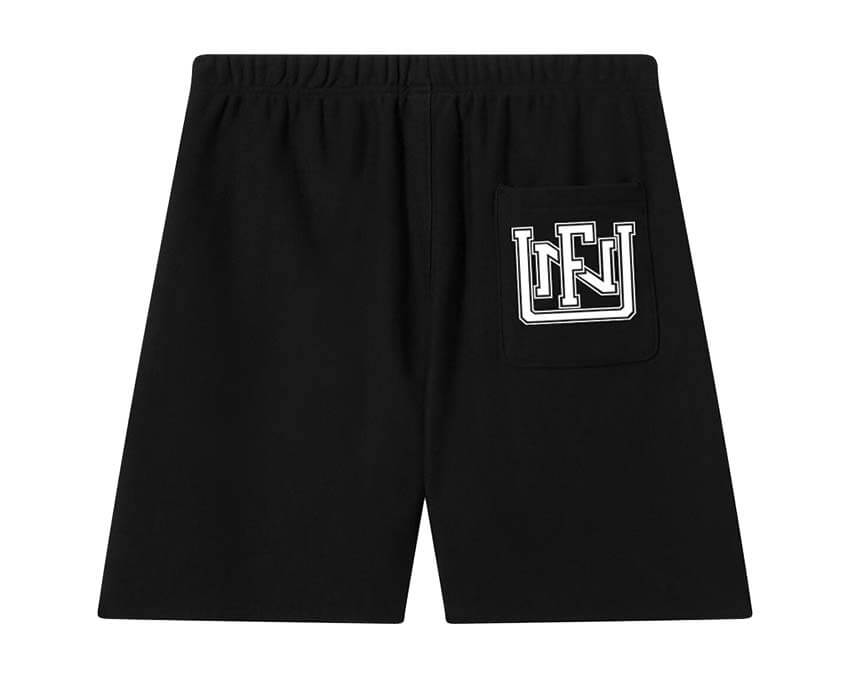
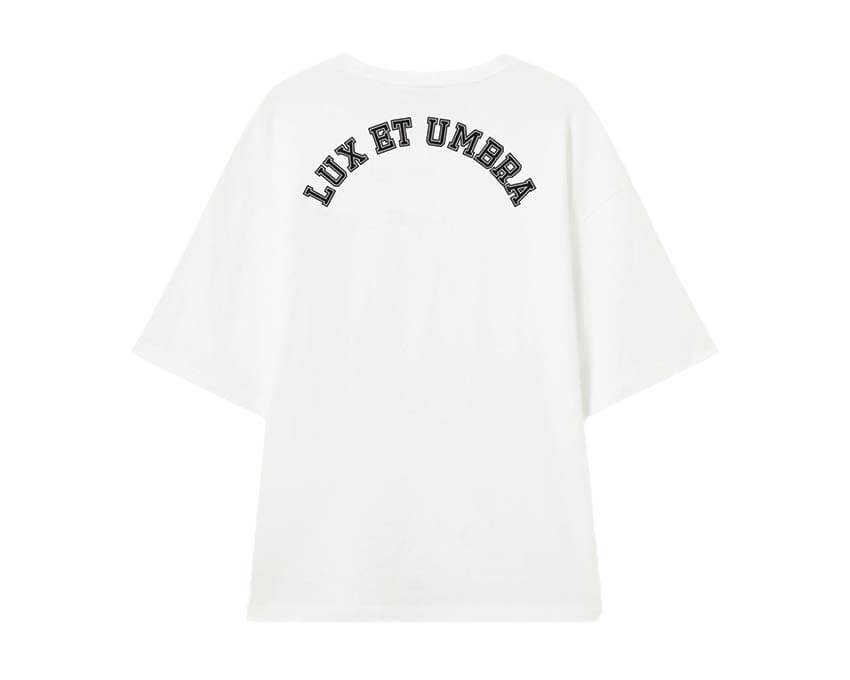
Some of the strongest garments in menswear were never intended to become fashion. They were designed for function. Built for teams. Worn by students, athletes, and communities that gave them meaning long before they found their way into contemporary wardrobes. Few brands embody that history better than Champion. For over a century, Champion has helped define the visual language of American athleticwear. The hoodie, the collegiate sweatshirt, the warm-up short—these were never simply products. They became uniforms for generations, carrying the stories of campuses, teams, and communities across the United States. What began as sportswear evolved into a cultural institution. With the Champion x Noirfonce collaboration, we wanted to explore that heritage through a fictional lens. The result is the University of Noirfonce, an imagined institution built around the values that have always guided us: curiosity, movement, creativity, and community. Inspired by traditional collegiate merchandise, the collection reinterprets classic university apparel through the Noirfonce perspective, creating garments that feel familiar while existing entirely within our own universe. At the center of the project sits the motto Lux et Umbra—Light and Shadow. The phrase has long served as a reflection of the dualities that shape both creativity and personal growth. Success and failure. Movement and stillness. The known and the unknown. It is a concept that felt perfectly suited to the world of academia, where learning often begins with uncertainty and discovery emerges through exploration. Visually, the collection draws heavily from vintage American university graphics. Arched typography, varsity-inspired insignias, athletic emblems, and traditional campus iconography were reworked into a series of designs that celebrate the golden age of collegiate sportswear while remaining unmistakably Noirfonce. The capsule itself consists of three essential pieces: a heavyweight t-shirt, a classic hooded sweatshirt, and athletic shorts. Together, they form the foundation of a uniform that feels equally at home on campus, on the court, or on the street. To bring the concept to life, we looked beyond the classroom and toward one of the most recognizable symbols of American youth culture: the school bus. Set against endless blue skies and open landscapes, the campaign imagines students arriving at the University of Noirfonce for the first day of a semester that does not exist. Flags bearing the university crest wave in the wind. Uniforms are worn with pride. Traditions are invented in real time. The imagery plays with nostalgia while remaining intentionally fictional. There is no campus. No lecture hall. No admissions office. Only an idea. Because the University of Noirfonce was never intended to be a place. It is a mindset. A reminder that learning does not end when school does. That curiosity remains one of the most powerful forces for growth. And that the communities we build around shared passions often become our greatest teachers. With Champion, a brand whose legacy is inseparable from the history of collegiate athleticwear, the collaboration felt like a natural opportunity to explore those themes. Class is now in session. Lux et Umbra. Get yours here. 

Read more

Champion x Noirfonce: The University of Noirfonce

Some of the strongest garments in menswear were never intended to become fashion. They were designed for function. Built for teams. Worn by students, athletes, and communities that gave them meaning long before they found their way into contemporary wardrobes. Few brands embody that history better than Champion. For over a century, Champion has helped define the visual language of American athleticwear. The hoodie, the collegiate sweatshirt, the warm-up short—these were never simply products. They became uniforms for generations, carrying the stories of campuses, teams, and communities across the United States. What began as sportswear evolved into a cultural institution. With the Champion x Noirfonce collaboration, we wanted to explore that heritage through a fictional lens. The result is the University of Noirfonce, an imagined institution built around the values that have always guided us: curiosity, movement, creativity, and community. Inspired by traditional collegiate merchandise, the collection reinterprets classic university apparel through the Noirfonce perspective, creating garments that feel familiar while existing entirely within our own universe. At the center of the project sits the motto Lux et Umbra—Light and Shadow. The phrase has long served as a reflection of the dualities that shape both creativity and personal growth. Success and failure. Movement and stillness. The known and the unknown. It is a concept that felt perfectly suited to the world of academia, where learning often begins with uncertainty and discovery emerges through exploration. Visually, the collection draws heavily from vintage American university graphics. Arched typography, varsity-inspired insignias, athletic emblems, and traditional campus iconography were reworked into a series of designs that celebrate the golden age of collegiate sportswear while remaining unmistakably Noirfonce. The capsule itself consists of three essential pieces: a heavyweight t-shirt, a classic hooded sweatshirt, and athletic shorts. Together, they form the foundation of a uniform that feels equally at home on campus, on the court, or on the street. To bring the concept to life, we looked beyond the classroom and toward one of the most recognizable symbols of American youth culture: the school bus. Set against endless blue skies and open landscapes, the campaign imagines students arriving at the University of Noirfonce for the first day of a semester that does not exist. Flags bearing the university crest wave in the wind. Uniforms are worn with pride. Traditions are invented in real time. The imagery plays with nostalgia while remaining intentionally fictional. There is no campus. No lecture hall. No admissions office. Only an idea. Because the University of Noirfonce was never intended to be a place. It is a mindset. A reminder that learning does not end when school does. That curiosity remains one of the most powerful forces for growth. And that the communities we build around shared passions often become our greatest teachers. With Champion, a brand whose legacy is inseparable from the history of collegiate athleticwear, the collaboration felt like a natural opportunity to explore those themes. Class is now in session. Lux et Umbra. Get yours here. 

Read more
THE TEMPLE OF CONSISTENCY: INSIDE THE "BRICK AFTER BRICK" POP-UP EXPERIENCE.

THE TEMPLE OF CONSISTENCY: INSIDE THE "BRICK AF...

To launch the Nigel Sylvester Jordan 4 "Brick After Brick," we refused the standard structure of a retail launch. A manifestation of relentless pursuit cannot be contained within polished walls. We demanded friction. We migrated. We took over a second, raw location; a raw entity within the city that served as the physical translation of Nigel’s philosophy. The space was unfinished. Unpolished. Cracked walls that held the memory of structure. Exposed red brick. It was a conceptual sanctuary...a refined industrial abyss where the concept of "brick after brick" could truly breathe. This was not a store; it was a testament to consistency. Our commitment to the narrative demanded more than product display. To honor the depth of this partnership, we moved our entire in-store museum from its home base to this raw, industrial temple. The complete chronology was re-established within the cracked architecture. By grounding these high-value archival artifacts within the gritty, unfinished space, we created a powerful visual dialogue. The contrast solidified the reality of legacy-building: masterpiece results are born from raw, imperfect consistency. This space was designed to consume the consumer. We constructed an immersive environment where our community could engage with the legacy on a granular level. Every texture, from the exposed raw brick to the premium suede of the prior "Brick by Brick" Jordan 4 itself, was a deliberately chosen component of the story. The "Brick After Brick" installation was not just about acquiring a sneaker; it was about matriculating into the mindset. It was an experience designed to go beyond "just" a transaction. It was a physical manifestation of discipline, structure, and the intensity required to build something permanent. We did not just launch a shoe. We dedicated a temple to consistency. BRICK AFTER BRICK. CONSISTENCY IS LEGACY.

Read more

THE TEMPLE OF CONSISTENCY: INSIDE THE "BRICK AF...

To launch the Nigel Sylvester Jordan 4 "Brick After Brick," we refused the standard structure of a retail launch. A manifestation of relentless pursuit cannot be contained within polished walls. We demanded friction. We migrated. We took over a second, raw location; a raw entity within the city that served as the physical translation of Nigel’s philosophy. The space was unfinished. Unpolished. Cracked walls that held the memory of structure. Exposed red brick. It was a conceptual sanctuary...a refined industrial abyss where the concept of "brick after brick" could truly breathe. This was not a store; it was a testament to consistency. Our commitment to the narrative demanded more than product display. To honor the depth of this partnership, we moved our entire in-store museum from its home base to this raw, industrial temple. The complete chronology was re-established within the cracked architecture. By grounding these high-value archival artifacts within the gritty, unfinished space, we created a powerful visual dialogue. The contrast solidified the reality of legacy-building: masterpiece results are born from raw, imperfect consistency. This space was designed to consume the consumer. We constructed an immersive environment where our community could engage with the legacy on a granular level. Every texture, from the exposed raw brick to the premium suede of the prior "Brick by Brick" Jordan 4 itself, was a deliberately chosen component of the story. The "Brick After Brick" installation was not just about acquiring a sneaker; it was about matriculating into the mindset. It was an experience designed to go beyond "just" a transaction. It was a physical manifestation of discipline, structure, and the intensity required to build something permanent. We did not just launch a shoe. We dedicated a temple to consistency. BRICK AFTER BRICK. CONSISTENCY IS LEGACY.

Read more
THE EVOLUTION OF AN ICON: A TRIBUTE TO NIGEL SYLVESTER X JORDAN BRAND.

THE EVOLUTION OF AN ICON: A TRIBUTE TO NIGEL SY...

Our in-store installations are manifestations. The last one was a testament to the silent shift Nigel Sylvester caused within the landscape of Jordan Brand. We began with disruption. Our walls, still adorned with Toro Bravo posters became the canvas for a layered narrative. It was a wheatpaste campaign over heritage. But it was conceptual. A stencil. When the posters were peeled back, the wheatpaste remained only where the iconic "Bike" logo had been cut. An absence that was a presence. As we continued to build on our shared stories, the space evolved again. We committed fully to gravity. We blacked out the entire intervention. A deep, abyssal black that absorbs the light, designed to give Nigel the absolute protagonism he deserves. The silence allows his noise to resonate louder. Adjacent to the wall, we curated a rare chronology. We bridged the gap between personal archives and community dialogue. This is not just product display; it is a shared history. We have gathered the defining pillars of Nigel’s partnership with Jordan Brand, sourced entirely from our personal collections to share with you, our community. To conclude this tribute, we leveled up. The exhibit included artifacts that transcend standard release. THE SIGNED BMX: The definitive tool of his craft. Nigel himself signed this machine, cementing its place in the physical museum of modern subculture. COMMEMORATIVE TEES: Artifacts of arrival. Tees from events we have been privileged to attend, get, and keep: now shared as part of this community manifest. We invited our community to experience the installation. To witness the contrast between the blacked-out wall and the archival heat. A tribute to the man who made basketball heritage his own, one driveway at a time.

Read more

THE EVOLUTION OF AN ICON: A TRIBUTE TO NIGEL SY...

Our in-store installations are manifestations. The last one was a testament to the silent shift Nigel Sylvester caused within the landscape of Jordan Brand. We began with disruption. Our walls, still adorned with Toro Bravo posters became the canvas for a layered narrative. It was a wheatpaste campaign over heritage. But it was conceptual. A stencil. When the posters were peeled back, the wheatpaste remained only where the iconic "Bike" logo had been cut. An absence that was a presence. As we continued to build on our shared stories, the space evolved again. We committed fully to gravity. We blacked out the entire intervention. A deep, abyssal black that absorbs the light, designed to give Nigel the absolute protagonism he deserves. The silence allows his noise to resonate louder. Adjacent to the wall, we curated a rare chronology. We bridged the gap between personal archives and community dialogue. This is not just product display; it is a shared history. We have gathered the defining pillars of Nigel’s partnership with Jordan Brand, sourced entirely from our personal collections to share with you, our community. To conclude this tribute, we leveled up. The exhibit included artifacts that transcend standard release. THE SIGNED BMX: The definitive tool of his craft. Nigel himself signed this machine, cementing its place in the physical museum of modern subculture. COMMEMORATIVE TEES: Artifacts of arrival. Tees from events we have been privileged to attend, get, and keep: now shared as part of this community manifest. We invited our community to experience the installation. To witness the contrast between the blacked-out wall and the archival heat. A tribute to the man who made basketball heritage his own, one driveway at a time.

Read more
ÁTABLE: TEN GUESTS. ONE LEGACY. a Tribute to Jordan via Nigel Sylvester.

ÁTABLE: TEN GUESTS. ONE LEGACY. a Tribute to Jo...

Inside the core of Noirfonce, the geometry was shifted. For this edition of áTable, the space was transformed not into a gallery, but into an intimate abyss: a silence designed to absorb the light. Ten individuals were selected from our community. They were not merely guests; they were chosen protagonists: selected components of a shared consciousness, brought together to celebrate the manifestation of relentless pursuit. The goal was simple: to frame the colossal legacy of Nigel Sylvester within the shared presence of structure. A curated structure demands a distinct culinary language. We recognized that to translate Nigel’s story required a fusion of street heritage and meticulous execution. We found this voice in Chef May from Aprons and Kimonos. May and her amazing team approached the evening not as caterers, but as architects of sensory memory. They understood that every flavor needed texture, and every dish needed a narrative arc. They manifested an incredible menu that served as a physical dialogue of Nigel’s journey. The meal was a progression of intensity. Courses designed to represent the stages of a silent revolution. THE FRICTION (First Manifestation): The raw street heritage. Chicken Inasal Skewers with Pickled Papaya. Lechon Kawali Larb with Endives.   THE CONSISTENCY (The Core): A study in structure and texture. Steak Tartare served on Edo Taro Chips. Cecina Cured Beef Croquettes. Mung Bean and Sweet Potato Hummus, Pita.   THE SUMMIT (The Finale): The absolute intensity of arrival. Hereford Ribeye with Parsnip Puree. THE RESOLUTION (Final Thought): Sweet and savory balance. Miso Chocolate Choux au Craquelin.   As we sat, framed by the Lux et Umbra of our environment, the architecture became tangible. The menu was the vehicle, but Nigel’s spirit was the gravity. We discussed the invisible thread that connects a simple asphalt driveway in Queens to the core of Noirfonce. Ten voices from different corners of our community, unified by the appreciation of a man who made basketball heritage his own, one silent disruption at a time. We left having shared more than a meal. We shared a commitment to the concept of moving forward. TEN PROTAGONISTS. ONE MANIFESTATION. áTABLE.

Read more

ÁTABLE: TEN GUESTS. ONE LEGACY. a Tribute to Jo...

Inside the core of Noirfonce, the geometry was shifted. For this edition of áTable, the space was transformed not into a gallery, but into an intimate abyss: a silence designed to absorb the light. Ten individuals were selected from our community. They were not merely guests; they were chosen protagonists: selected components of a shared consciousness, brought together to celebrate the manifestation of relentless pursuit. The goal was simple: to frame the colossal legacy of Nigel Sylvester within the shared presence of structure. A curated structure demands a distinct culinary language. We recognized that to translate Nigel’s story required a fusion of street heritage and meticulous execution. We found this voice in Chef May from Aprons and Kimonos. May and her amazing team approached the evening not as caterers, but as architects of sensory memory. They understood that every flavor needed texture, and every dish needed a narrative arc. They manifested an incredible menu that served as a physical dialogue of Nigel’s journey. The meal was a progression of intensity. Courses designed to represent the stages of a silent revolution. THE FRICTION (First Manifestation): The raw street heritage. Chicken Inasal Skewers with Pickled Papaya. Lechon Kawali Larb with Endives.   THE CONSISTENCY (The Core): A study in structure and texture. Steak Tartare served on Edo Taro Chips. Cecina Cured Beef Croquettes. Mung Bean and Sweet Potato Hummus, Pita.   THE SUMMIT (The Finale): The absolute intensity of arrival. Hereford Ribeye with Parsnip Puree. THE RESOLUTION (Final Thought): Sweet and savory balance. Miso Chocolate Choux au Craquelin.   As we sat, framed by the Lux et Umbra of our environment, the architecture became tangible. The menu was the vehicle, but Nigel’s spirit was the gravity. We discussed the invisible thread that connects a simple asphalt driveway in Queens to the core of Noirfonce. Ten voices from different corners of our community, unified by the appreciation of a man who made basketball heritage his own, one silent disruption at a time. We left having shared more than a meal. We shared a commitment to the concept of moving forward. TEN PROTAGONISTS. ONE MANIFESTATION. áTABLE.

Read more
Champion, The Hoodie, and the Making of an American Uniform

Champion, The Hoodie, and the Making of an Amer...

Some garments become icons by accident. Not through marketing campaigns or celebrity endorsements, but by solving a problem so effectively that people refuse to stop wearing them. The hoodie is one of those garments. Today, it's everywhere. On construction sites and university campuses. In basketball arenas and boardrooms. Worn by athletes, artists, students, and laborers alike. But long before it became a symbol of contemporary culture, the hoodie was simply workwear. And at the center of that story sits Champion. The company that would become Champion was founded in Rochester, New York, in 1919 by the Feinbloom family under the name Knickerbocker Knitting Company. Their business was simple: produce durable athletic apparel for schools, colleges, and sports teams. This was an America in motion. Factories were expanding, organized sports were growing, and universities were becoming incubators for a new kind of youth culture. Clothing needed to be practical, resilient, and affordable; Champion understood this better than most. Throughout the 1930s and 40s, the brand became a fixture of collegiate athletics, supplying sweatshirts and training garments to campuses across the United States. Long before logos became status symbols, Champion's products earned their reputation through utility. The garments worked. And people kept wearing them. The origins of the hoodie are surprisingly straightforward. Athletes training outdoors needed protection from the elements. So did warehouse workers loading trucks in winter and laborers starting shifts before sunrise. The answer was a simple innovation: attach a hood to a heavyweight sweatshirt. The concept was hardly revolutionary. Yet its impact was enormous. The hood added warmth without restricting movement. The kangaroo pocket offered storage and shelter for cold hands. The garment could be layered, abused, washed repeatedly, and worn every day. It became a tool. Like denim jeans. Like work boots. Like a canvas chore coat. Its value came from function. If workwear gave the hoodie its purpose, American universities gave it visibility. Throughout the post-war decades, campuses became laboratories for casual dress. Athletic gear moved beyond the field and into everyday life. Students wore sweatshirts between classes. Athletes wore them to practice. Professors wore them on weekends. The boundaries between sportswear and daily clothing began to blur. Champion was uniquely positioned for this shift. The brand's Reverse Weave construction, introduced in the 1930s and refined over the decades, solved a persistent problem: shrinkage. By rotating the grain of the fabric and reinforcing the side panels, Champion created sweatshirts that held their shape through years of wear. What began as a technical solution became one of the most enduring innovations in sportswear history. By the 1970s and 80s, the hoodie had escaped its original environment. It appeared in skateboarding. In music. In youth culture. In cities far removed from the college campuses that helped popularize it. The garment's appeal was universal because its design was honest. There was no excess. No unnecessary decoration. Just cotton, fleece, stitching, and purpose. Like the best examples of American design, the hoodie succeeded because it performed exactly as intended. More than a century after Champion's founding, the hoodie remains one of the few garments that feels equally at home in sport, work, and everyday life. Its story mirrors the story of American sportswear itself: practical solutions becoming cultural symbols through repeated use. Champion didn't set out to create an icon. They set out to make better athletic clothing. The hoodie simply happened to be one of those ideas that proved impossible to improve upon. Sometimes the most influential designs aren't the loudest. They're the ones that become part of daily life. The ones we stop noticing because they've always been there. Like a good hoodie.  

Read more

Champion, The Hoodie, and the Making of an Amer...

Some garments become icons by accident. Not through marketing campaigns or celebrity endorsements, but by solving a problem so effectively that people refuse to stop wearing them. The hoodie is one of those garments. Today, it's everywhere. On construction sites and university campuses. In basketball arenas and boardrooms. Worn by athletes, artists, students, and laborers alike. But long before it became a symbol of contemporary culture, the hoodie was simply workwear. And at the center of that story sits Champion. The company that would become Champion was founded in Rochester, New York, in 1919 by the Feinbloom family under the name Knickerbocker Knitting Company. Their business was simple: produce durable athletic apparel for schools, colleges, and sports teams. This was an America in motion. Factories were expanding, organized sports were growing, and universities were becoming incubators for a new kind of youth culture. Clothing needed to be practical, resilient, and affordable; Champion understood this better than most. Throughout the 1930s and 40s, the brand became a fixture of collegiate athletics, supplying sweatshirts and training garments to campuses across the United States. Long before logos became status symbols, Champion's products earned their reputation through utility. The garments worked. And people kept wearing them. The origins of the hoodie are surprisingly straightforward. Athletes training outdoors needed protection from the elements. So did warehouse workers loading trucks in winter and laborers starting shifts before sunrise. The answer was a simple innovation: attach a hood to a heavyweight sweatshirt. The concept was hardly revolutionary. Yet its impact was enormous. The hood added warmth without restricting movement. The kangaroo pocket offered storage and shelter for cold hands. The garment could be layered, abused, washed repeatedly, and worn every day. It became a tool. Like denim jeans. Like work boots. Like a canvas chore coat. Its value came from function. If workwear gave the hoodie its purpose, American universities gave it visibility. Throughout the post-war decades, campuses became laboratories for casual dress. Athletic gear moved beyond the field and into everyday life. Students wore sweatshirts between classes. Athletes wore them to practice. Professors wore them on weekends. The boundaries between sportswear and daily clothing began to blur. Champion was uniquely positioned for this shift. The brand's Reverse Weave construction, introduced in the 1930s and refined over the decades, solved a persistent problem: shrinkage. By rotating the grain of the fabric and reinforcing the side panels, Champion created sweatshirts that held their shape through years of wear. What began as a technical solution became one of the most enduring innovations in sportswear history. By the 1970s and 80s, the hoodie had escaped its original environment. It appeared in skateboarding. In music. In youth culture. In cities far removed from the college campuses that helped popularize it. The garment's appeal was universal because its design was honest. There was no excess. No unnecessary decoration. Just cotton, fleece, stitching, and purpose. Like the best examples of American design, the hoodie succeeded because it performed exactly as intended. More than a century after Champion's founding, the hoodie remains one of the few garments that feels equally at home in sport, work, and everyday life. Its story mirrors the story of American sportswear itself: practical solutions becoming cultural symbols through repeated use. Champion didn't set out to create an icon. They set out to make better athletic clothing. The hoodie simply happened to be one of those ideas that proved impossible to improve upon. Sometimes the most influential designs aren't the loudest. They're the ones that become part of daily life. The ones we stop noticing because they've always been there. Like a good hoodie.  

Read more